Blog Post Page | Seattle Gold Grills
Blog Post Page on Seattle Gold Grills. A luxury digital gallery and bespoke configurator for custom dental jewelry.
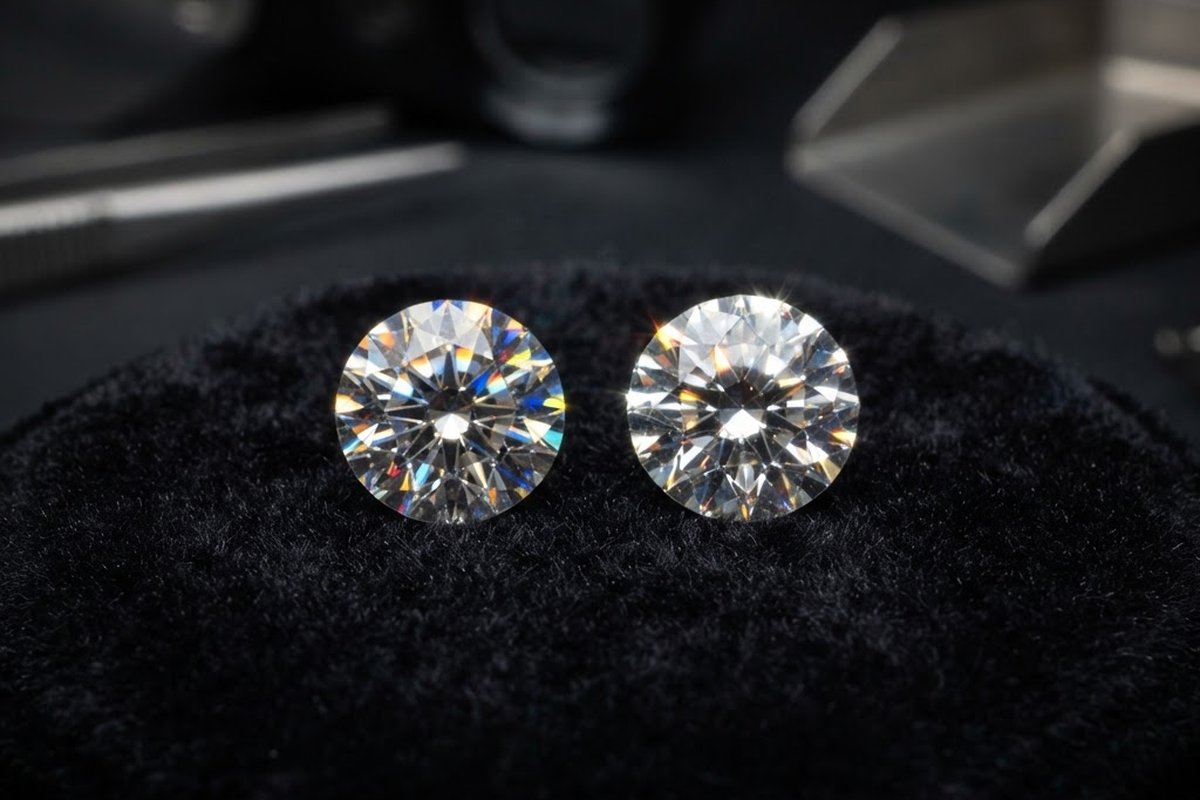
See what VVS clarity actually means, how moissanite and diamond differ in sparkle, hardness and testing, and which one suits your budget.
"VVS" gets thrown around everywhere in iced-out jewelry, and moissanite has quietly become the stone that changed the whole game. So what's actually different between VVS moissanite and diamonds — and which one deserves to be in your piece? Here's the honest breakdown.
VVS stands for Very Very Slightly included — a clarity grade. It means the stone has microscopic flaws you can't see without magnification. So "VVS" isn't a type of stone; it's a quality level. A VVS diamond is a near-flawless diamond. "VVS moissanite" means the moissanite is clean and top-grade.
Hardness. Diamond is the hardest natural material (10 on the Mohs scale). Moissanite is a 9.25 — harder than sapphire and ruby, more than tough enough for grillz, rings, and daily-wear jewelry.
Sparkle. Here's the surprise: moissanite actually sparkles more than diamond. It has higher refraction and more "fire" — that rainbow flash under light. Side by side, most people think the moissanite is the "better" diamond.
Color. Both come in colorless/near-colorless grades. Quality moissanite reads white next to a diamond, with no yellow tint.
Price. The big one. A 1-carat VVS diamond runs thousands. A top-grade 1-carat moissanite runs a small fraction of that. Same look on your finger or in your grill, radically different bill.
Resale. Diamonds hold value better long-term. But for wearable jewelry you actually rock daily — not investment stones — that gap matters less than people think.
Choose VVS moissanite if:
Choose diamond if:
Our most common recommendation:
Shop Grillz · Custom Gold Grillz · Bottom Grillz · Seattle & Renton · Book an Appointment
Blog Post Page on Seattle Gold Grills. A luxury digital gallery and bespoke configurator for custom dental jewelry.