
SGG Guide
How to Layer Gold Chains, Bracelets, and Anklets Without Tangling
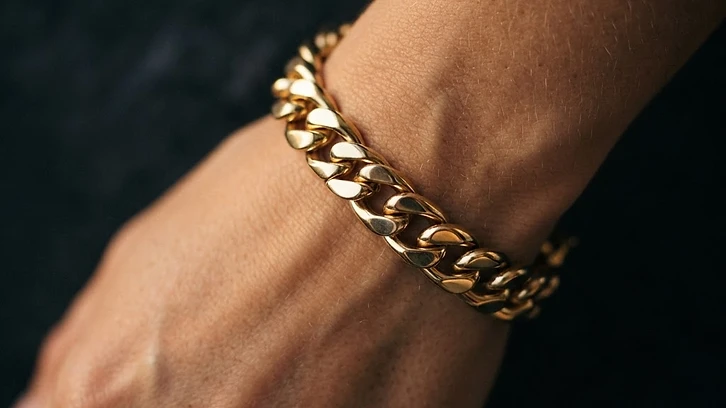
Layering Is a Measurement Problem First
Most layered jewelry fails for a boring reason: two pieces sitting at almost the same length, rubbing against each other until one of them wins. Get the lengths and widths right and layering looks effortless, because nothing is actually competing.
Lengths That Sit Apart
Two inches between pieces is the working rule for necklaces. The standard stations are 16, 18, 20, 22, and 24 inches, which is why they are the lengths everyone stocks. A full breakdown of where each one lands is in the gold chain length guide.
- 16 and 18 is the classic pair, one at the collarbone and one just below it.
- 18 and 20 reads a little more open and works better over a collar.
- 20 and 24 gives you distance for a pendant on the longer chain.
Bracelets and anklets have the same logic with less room. A bracelet layer works when widths differ, not when two identical chains sit side by side.
Mix Widths on Purpose
The eye reads a stack as one shape, so give it a hierarchy. One substantial piece, one or two light ones.
- 6mm with 2mm is a clean contrast at the wrist.
- 4mm with 3mm and 2mm is the same idea in threes, as long as the widths are visibly different.
- Two pieces at the same width is the combination that looks accidental rather than styled.
Weight matters as much as appearance. Three heavy pieces on one wrist swing, twist, and hit each other. One anchor piece plus light ones stays put.
Chain Types That Play Well Together
Texture is the other half of layering. Two flat, shiny chains compete. A textured chain next to a smooth one reads as depth.
- Rope with Cuban. The twist catches light, the flat links reflect it.
- Box with Figaro. The box chain is the strong one, the Figaro supplies the pattern.
- Herringbone with anything. It is the flattest, brightest chain we make, so it works as the base layer. It also kinks permanently if it bends, so it does not belong under three other pieces.
The differences between these are set out in types of gold chains.
The Friction Rules for Bracelets and Anklets
Wrist and ankle pieces take more abuse than necklaces because they move all day.
- Point the clasps the same way. Clasps on opposite sides rub.
- Keep the anklet above the ankle bone, or it will catch on socks and shoe collars. Anklets are sized to sit, not to hang.
- Do not stack a prong-set piece against a chain. Prongs catch links, and links lose.
- Take them off before boots and sneakers. It is the fastest way to stretch a clasp.
Our gold bracelets and Cuban link bracelet guide cover the styles that hold up to daily wear, and the gold anklet guide covers sizing and clasp choice in detail.
Metals and Karats
14K is 58.3% gold and 18K is 75%. That difference changes two things in a stack: color, which gets warmer and deeper at 18K, and hardness, which drops. An 18K chain rubbing against a 14K chain will show wear on the softer piece over time.
For a stack you wear every day, matching karat is the simple answer. Our rate is $160 per gram for 14K and $170 for 18K, published, so you can price any combination before you commit. More on the karat question in 10K vs 14K gold.
Care for a Stack
- Store pieces separately. A pile of chains becomes one knot.
- Fasten clasps before storing. An open clasp catches everything near it.
- Clean with warm water and a soft brush, then dry completely before wearing again.
- Check the heaviest clasp once a month. That is the piece carrying the most load.
Want help building a stack that actually sits right? Call or text (206) 250-0833, browse gold chains, bracelets, and pendants, or book an appointment in Renton and we will lay the options out at the right lengths.
Frequently Asked Questions
Ask us about this article
Send a question and our team replies to the email or phone you leave.