
Gold Tennis Bracelets: The Complete Buying Guide (Styles, Stones & Sizes)
 What Is a Tennis Bracelet?
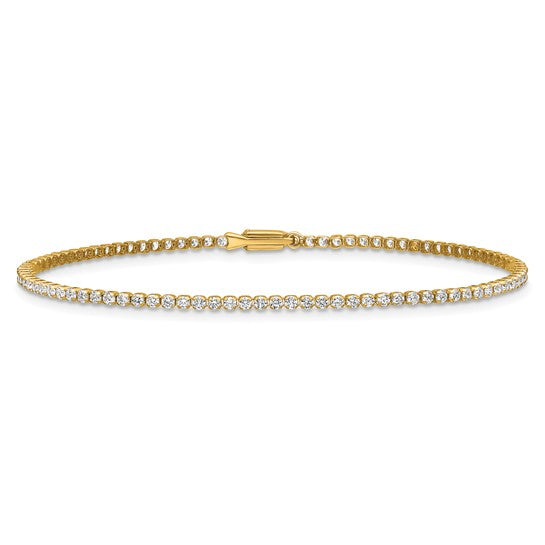
A tennis bracelet is a flexible band of individually set stones running all the way around the wrist, with no centerpiece and no gaps. Every stone faces out, every stone gets the same setting, and the effect is a continuous line of sparkle. The style dates back decades, but the name comes from a famous sports moment: at the 1987 US Open, Chris Evert stopped her match to search for a diamond line bracelet that had snapped and scattered across the court. The broadcast made the style famous, and "tennis bracelet" became the name.
It's the most versatile diamond-style jewelry you can wear. A tennis bracelet works with a suit, a t-shirt, or a wedding dress. That mix of sparkle and wearability is why it's one of the best-selling bracelet styles in gold.
The Tennis Bracelet Styles We Make
- Gold tennis bracelet. The classic: a full line of stones set in solid gold. Our gold tennis bracelet collection is the heart of the category, in 10K and 14K.
- Silver moissanite tennis bracelet. Moissanite stones set in sterling silver. The silver moissanite tennis bracelet delivers near-diamond brilliance at a fraction of the price.
- Cubic zirconia tennis bracelet. CZ stones in gold settings. The cubic zirconia tennis bracelet is the most affordable way to wear the look.
Stone Choice: Moissanite, CZ or Diamond?
Three honest options. Moissanite is a lab-grown stone with more fire than diamond, near-identical hardness, and about a tenth of the price. Cubic zirconia is the budget pick: bright and clean out of the box, softer over years of daily wear. Diamond is the top of the market for a reason, though the gap between diamond and moissanite visually has narrowed to almost nothing. We break the full comparison down in our moissanite vs diamond guide, which covers the same trade-offs for chains and grillz.
Stone Size and Width: How to Choose
Tennis bracelets are measured two ways: total carat weight across the whole bracelet, and the size of each individual stone. Small stones (2mm and under per stone) give a delicate, stackable line. Medium stones (2.5 to 3.5mm) are the classic look most people picture. Large stones (4mm and up) read bold and read fast. One practical note: smaller stones mean more of them, and a 3mm-stone bracelet at 7 inches might hold 60 stones while a 4mm version holds 45. More stones means more setting work, which is part of why fine tennis bracelets can cost more than chunkier styles with the same total carat weight.
Wrist Size: Getting the Right Fit
Measure your wrist with a soft tape, snug but not tight, then add half an inch to three-quarters of an inch. Most tennis bracelets are made in 6.5 and 7 inch lengths, with 7 being the standard women's fit and 7.5 to 8 for larger wrists. A tennis bracelet should move slightly but not slide over the wrist bone. If it's a gift and you can't measure, 7 inches is the safe default.
Clasps and Safety
A tennis bracelet lives or dies on its clasp, because the whole value is in the line of stones staying on your wrist. Look for a double security setup: a box or hidden clasp plus a figure-8 safety catch on the side. When you put it on, push the clasp until it audibly clicks, then close the safety. That habit takes two seconds and prevents the "searching the tennis court" problem the bracelet is named after.
Can You Wear One Every Day?
Yes, with two rules. First, treat the settings kindly: individual stone settings are the bracelet's structure, so take it off for heavy lifting, gym work, and anything that grinds the wrist against a surface. Second, keep it out of chlorine pools and hot tubs, which dull both gold and stones over time. Clean it with warm water, mild soap and a soft brush, the routine we cover in our gold jewelry cleaning guide. Stored properly and cleaned monthly, a tennis bracelet is a lifetime piece.
10K, 14K or 18K?
10K is the hardest, most scratch-resistant and most affordable; 14K is the everyday standard and the sweet spot for a bracelet that gets daily wear; 18K gives the richest gold color around the stones. The full comparison is in our 10K vs 14K gold guide.
Wearing It With Everything Else
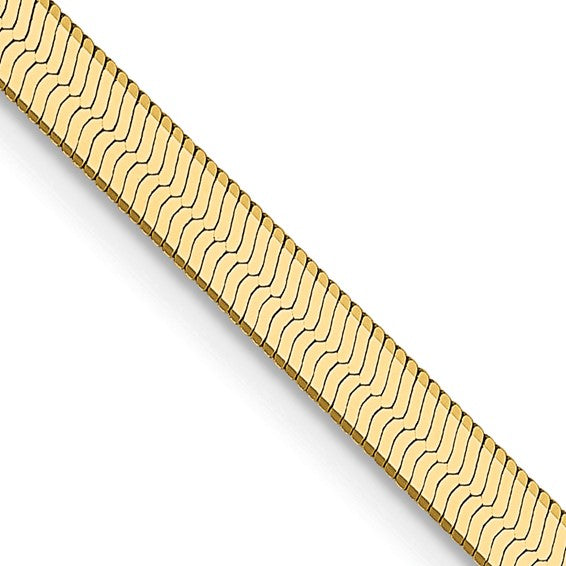
A tennis bracelet pairs with any bracelet style, and it's the piece that pulls a stack together: try it next to a Cuban link bracelet or a herringbone bracelet, where the stone line adds sparkle against the solid gold. To see every wrist style we make side by side, start with our men's and women's gold bracelets guide, or browse the full gold bracelet collection.
Comments