
Herringbone Chains: The Complete Buying Guide (Styles, Widths & Prices)
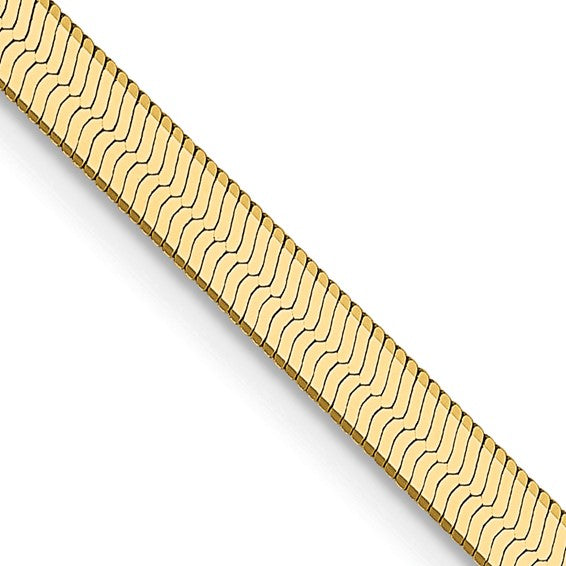
 What Is a Herringbone Chain?
A herringbone chain is woven from flat strips of metal laid in alternating chevron rows, like a tiny woven ribbon of gold. The finished chain has no visible links at all: it's one smooth, flat, continuous band that lies perfectly against the chest and pours across the skin like liquid gold.
The weave itself is ancient, the same chevron pattern used in textiles and flooring for centuries, and it remains one of the most formal, dressy looks in all of gold jewelry. Nothing catches light across a wider surface than a herringbone. When people describe a chain as looking "expensive," this is the style they're picturing.
The Herringbone Styles We Make
- Gold herringbone chain. The classic flat weave in solid gold. Our gold herringbone chain is the pure statement version of the style.
- Gold herringbone bracelet. The weave moves to the wrist, where it lies flat and fluid all day. The gold herringbone bracelet is one of the most elegant bracelets in gold.
- Silky herringbone bracelet. A finer, silkier weave with extra drape. The silky herringbone bracelet is the refined version of the wrist style.
Width and Length: How to Choose
Width: herringbone is all about width, more than any other chain style. A 3mm herringbone is a delicate ribbon; 6mm reads dressy; 10mm and up is where the style becomes unmistakable, a wide collar of liquid gold that looks like far more metal than the scale suggests, because every millimeter is on display. The good news: herringbone is generally one of the more affordable ways to wear a wide gold look, because the flat weave spreads gold across a surface rather than building thickness.
Length: 16 to 18 inches for the choker-style collar fit, 20 inches for the standard, 22 to 24 inches to let the weave lie across the chest in full view. Herringbone is worn to be seen flat, so slightly shorter lengths often look better on this style than on others.
The One Rule: Never Bend It
This is the most important paragraph in this guide. A herringbone is flexible along its length, and that's it. It bends the way a ribbon bends, one direction, following the body. What it must never do is twist, kink, or bend sideways across its width. The flat weave is made of many thin strips, and a sideways crease is permanent: it can't be pressed or repaired out the way a jeweler can fix a bent round link. If you see a vintage herringbone with a crease in it, that crease has been there for decades.
Practical version of the rule: take it off before contact sports and workouts, never sleep in a wide one, store it flat in a box or hanging from a hook, and never fold it into a pocket. Treat it with that one ounce of care and a herringbone outlasts most other styles in the case.
Should You Hang a Pendant on It?
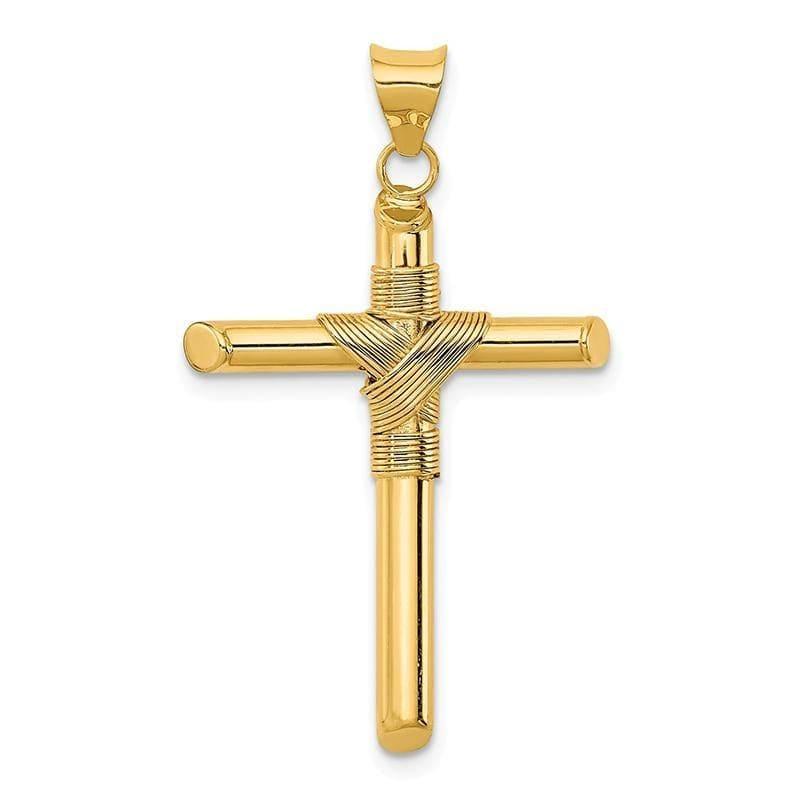
No, and here's the honest reason: a pendant concentrates all its weight on one point of the weave, and that point is exactly where herringbone doesn't like sideways stress. If you love pendants, wear the herringbone alone and put the pendant on a box chain or a rope chain, which are built for it. The herringbone is the statement, not the backdrop.
10K, 14K or 18K?
Because a herringbone is all flat surface, gold color shows more here than on any other chain style, and higher karat really pays off visually. 10K is the hardest and most affordable, 14K is the standard, and 18K gives the deepest, richest gold across that wide polished surface. The full trade-off is in our 10K vs 14K gold guide, with the top of the range in the 18K gold chain collection.
Who the Herringbone Is For
The herringbone is for the buyer who wants elegance first. It's the most dressed-up chain in the case, the one that turns a plain black shirt into an outfit. See how it compares to every other construction in the gold chain styles guide, or browse the whole gold chain collection to see it against the field.
Comments