
Snake Chains: The Complete Buying Guide (Styles, Widths & Prices)
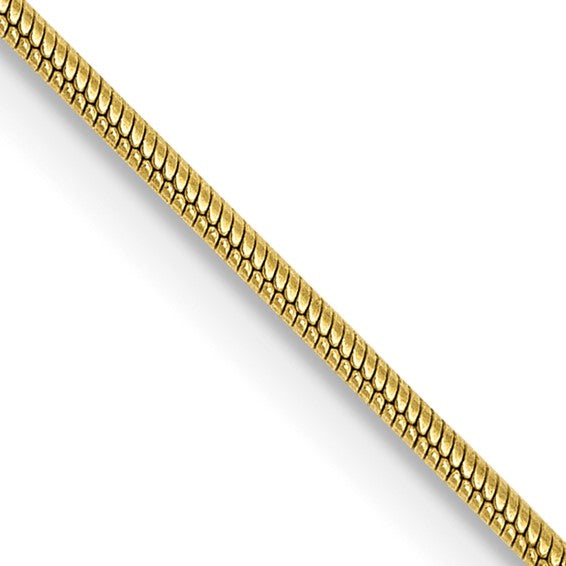
 What Is a Snake Chain?
A snake chain is built from dozens of tight round metal rings woven side by side until the surface becomes one smooth, continuous tube. There are no visible links, no pattern, no catches. Run your hand along one and it feels less like a chain and more like a flexible rod of gold, which is exactly why the style got its name: it moves the way a snake does.
It's the smoothest chain construction there is. A snake chain doesn't pinch, doesn't pull arm hair the way some link chains can, and sits against the skin like fabric. For people who find most chains fussy, the snake chain is the minimalist's answer.
The Snake Chain Styles We Make
- Gold snake chain. The pure version of the style: a smooth, round tube of solid gold. Our gold snake chain is the everyday wear of the category.
- Round snake chain. The tightly woven round-body build that defines the style. The round snake chain has the cleanest, most uniform surface of the family.
- Silver snake chain. The same construction in sterling silver. The silver snake chain delivers the identical smooth look at a silver price.
Width and Length: How to Choose
Width: 1 to 2mm is the choker and pendant range, and this is where snake chains live most of the time. 2 to 3mm reads as a fine standalone chain. 4mm and up gets chunky fast, because a snake chain is essentially a solid tube: every millimeter of width adds a full ring of metal around the circumference.
Length: 16 to 18 inches is the classic snake-chain fit, sitting close at the base of the neck, and the choker look is what the style is known for. 20 inches works for pendant wear. Because the chain has almost no texture, shorter lengths read intentional rather than plain.
The Snake Chain's Superpower: Drape
Drape is how a chain falls, and no construction falls like a snake chain. The tight weave makes it semi-rigid, so it holds a perfect curve around the neck instead of sagging or bunching. That makes it the best layering base in gold jewelry: a 16-inch snake under a 20-inch rope or a longer Cuban creates three distinct textures without any of the chains fighting each other. It's also the top choice for pendants that need to sit centered, because the smooth tube doesn't grab or tilt a bail the way textured links can.
How to Care for a Snake Chain
Snake chains are durable in daily wear, but the construction has one rule: don't crush it. The smooth tube shape depends on all those tiny rings staying aligned, so keep it away from doorframe collisions, gym clamps and the bottom of a junk drawer. Store it hanging or flat, never coiled tightly. If it ever does bend sharply, bring it to a jeweler rather than bending it back yourself. Our gold jewelry cleaning guide covers the rest of the routine.
10K, 14K or 18K?
10K is the hardest and most affordable, 14K is the everyday standard, and 18K gives the richest color, which shows up beautifully on a smooth polished tube. Full comparison in the 10K vs 14K gold guide, with the top end in the 18K gold chain collection.
Who the Snake Chain Is For
The snake chain is for the minimalist, the layerer, and the pendant wearer who wants zero distraction. It's the least "look at me" chain in gold and one of the most elegant. To see how it stacks against every other construction, read the full gold chain styles guide, or go the other direction with our Cuban link guide and rope chain guide.
Comments