
Box Chains: The Complete Buying Guide (Styles, Widths & Prices)
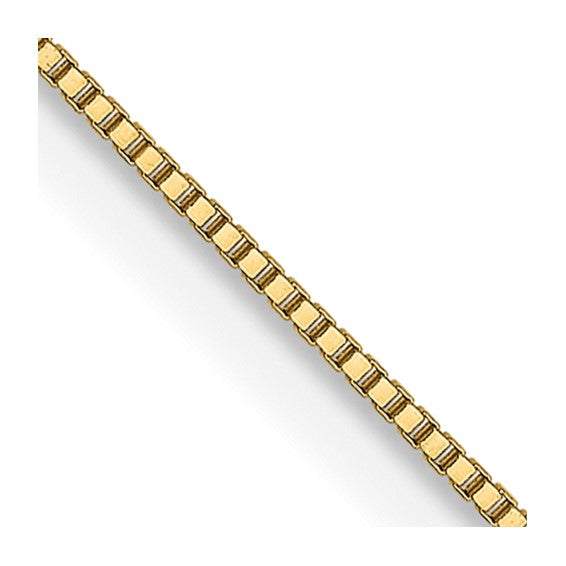
 What Is a Box Chain?
A box chain is built from square links, each one threaded through the last so the finished chain runs as a clean row of boxes. Where a rope twists and a Cuban lies flat and wide, the box chain is geometric: straight lines, sharp corners, and a shape that reads bigger than its actual width.
It's also one of the strongest chain constructions you can buy. Each square link is closed on all four sides, so the chain distributes pull across a lot of metal at once. That strength-to-weight ratio is why box chains have carried pendants for generations: they're the quiet workhorse that never grabs attention away from the piece hanging on them.
The Box Chain Styles We Make
- Classic box chain. The square-link original. Our gold box chain is the pure version: clean, angular, and strong for its weight.
- Round box chain. Square links with softened, rounded edges. The round box chain keeps the box structure but wears smoother against the skin.
- White gold box chain. The same construction in white gold. The white gold box chain is the modern, understated take on the style.
- Diamond cut silver box. Faceted links in sterling silver. The diamond cut silver box chain throws real sparkle at a silver price.
- Silver box chain. The plain sterling version. The silver box chain is one of the best-value chains we sell.
- Box bracelet. The style moves to the wrist in the gold box bracelet, stiff, clean and geometric.
Width and Length: How to Choose
Width: 1 to 2mm is the classic pendant range for box chains, thin enough to disappear behind a cross or medallion. 2.5 to 4mm reads as a standalone chain while still being light. 5mm and up starts reading solid, and because box links use less metal than Cuban or rope links of the same width, a wide box chain is often the most affordable way to reach a bold look.
Length: 18 inches for a base-of-neck fit, 20 inches for the standard, 22 to 24 inches for mid-chest wear with a pendant. Because the chain is slightly stiffer than a rope or a snake chain, it holds its shape and doesn't bunch, which is exactly what you want under a pendant.
Why Box Chains Are the Best Pendant Carrier
Three reasons, all practical. First, strength: closed square links don't open the way thin round links can. Second, the box shape grips a bail or jump ring at several points, so pendants don't slide and pool to one side. Third, neutrality: a box chain is quiet enough to let the pendant talk. That's why dog tags, crosses and lockets have hung from box chains for a hundred years. If the pendant is the point, start with the gold box chain collection.
10K, 14K or 18K?
10K is the hardest and most affordable, 14K is the standard for everyday chains, and 18K is the richest color but softer, which matters more on a box chain than on a denser style. The full breakdown is in our 10K vs 14K gold guide, with 18K options in the 18K gold chain collection.
How a Box Chain Fits a Collection
The box chain is the utility player: it's usually someone's second or third chain, bought specifically to carry a favorite pendant or to wear as an everyday piece that can take abuse. If you're comparing it against the headliners, our gold chain styles guide covers every construction we make, the Cuban link guide handles the statement side, and the rope chain guide covers the sparkle side.
Comments